WHS Compliant Core Trays: What Manual Handling Guidelines Mean for Your Operation
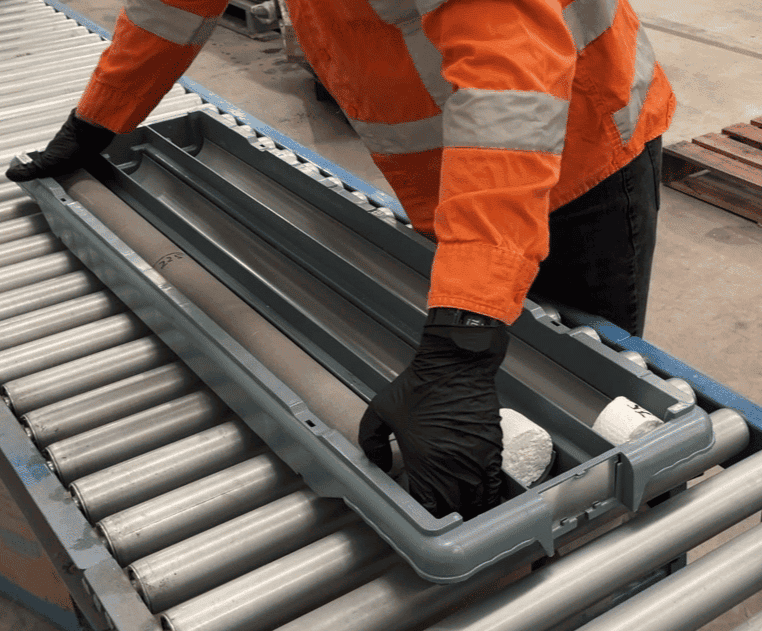
WHS compliant core trays are some of the most often handled items on a geotechnical drill site. A loaded HQ tray can weigh over 30 kg, and field crews lift, carry, and stack hundreds or even thousands in a single investigation. Most core trays in the geotechnical industry are designed mainly to hold core samples and to be easy to ship, not for the people who use them every day.
Australian WHS rules clearly say how to manage repeated lifting of heavy loads. But does your equipment help your team meet these guidelines, or could it be making things harder?
What the Manual Handling Guidelines Actually Say
The WHS Code of Practice for Hazardous Manual Tasks identifies risks such as repeated force, uncomfortable body positions, and repetitive movements. For core tray handling, the main risks are repetitive lifting, awkward grips (especially when trays don’t have good handles), and how often the task is performed.
The code doesn’t set a maximum weight or tray design, but it requires employers to identify hazards and implement controls to reduce risk. Choosing WHS compliant core trays is one way to meet these requirements, as such equipment should reduce strain, not just hold core samples.
Where Most Core Trays Fall Short on WHS Compliance
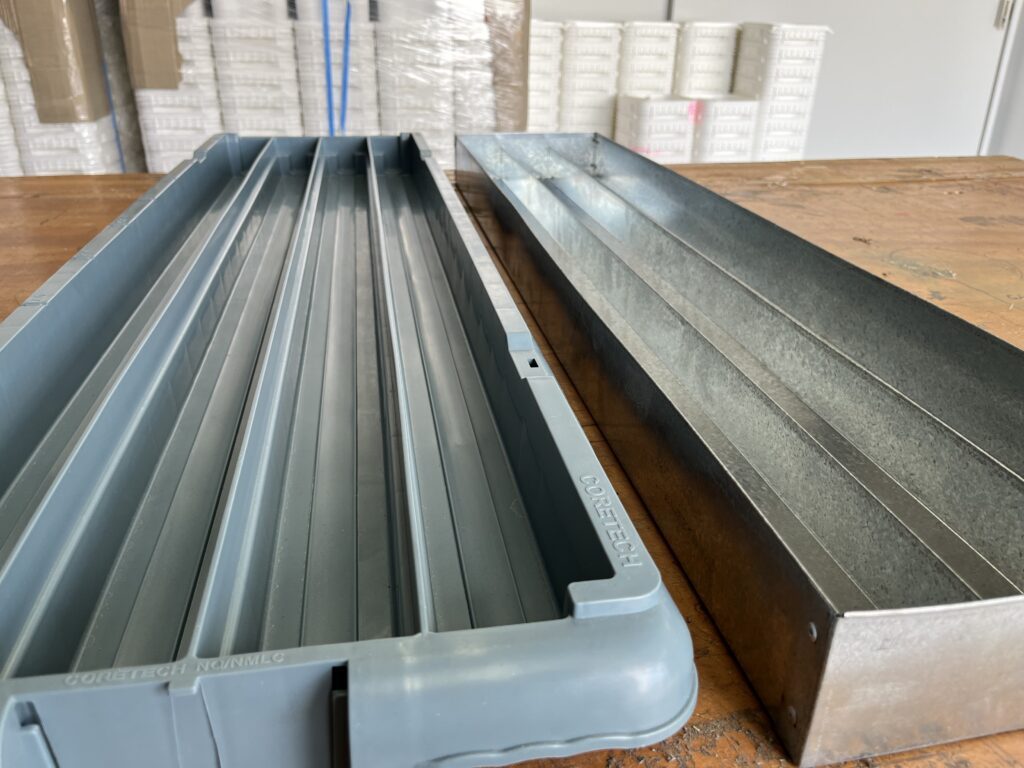
Traditional core trays, whether metal or plastic, focus on storage rather than on the person handling them. These trays often fall short on manual handling compliance. Common problems include trays that are too long to lift comfortably, edges that are hard to hold, trays that move when stacked, and no lifting points to maintain a balanced posture.
These are not deliberate design failures but result from prioritising storage and freight over handling.
How WHS Compliant Core Trays Address Manual Handling Risk
A core tray designed for manual handling should address key WHS risk factors:
- Optimised length. Shorter trays reduce force on backs and shoulders. A 1050mm tray is long enough for core runs but short enough for safe handling.
- Integrated handling points. Moulded handles and finger grooves at both ends allow secure, balanced two-handed lifting, even when trays are wet or handled with gloves.
- Flat-bottomed base. A stable base enables safe stacking and reduces the manual handling required for tray repositioning.
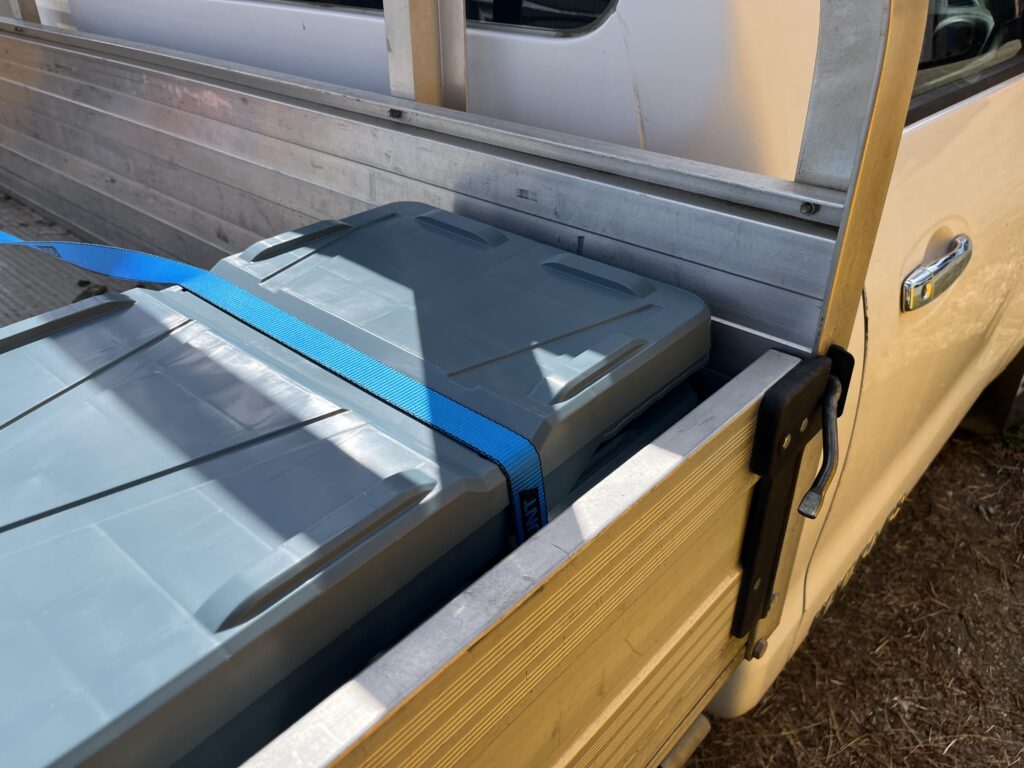
- Secure transport features. Reinforced grooves for straps and holes for cable ties make it easier to fasten trays for transport.
What to Specify in Tenders and Purchase Orders
If you’re writing core tray specifications, include WHS manual handling criteria along with size and material requirements. Useful language includes:
These practical criteria ensure you specify WHS compliant core trays that are designed for users, not just for storing core.
- Tray must include integrated lifting handles at both ends, suitable for gloved use.
- Tray bed length must not exceed 1050mm to support safe manual handling.
- Tray base must be flat to enable stable stacking on roller racking without additional restraint.
- Tray must include provisions for a ratchet strap or cable tie securing during transport.
Racking Matters Too
Racking is also key to reducing manual handling risks. Gravity roller racking lets trays slide rather than be lifted, reducing strain and injury risk. Optimising shed layout with adjustable racking, roller conveyors, and pallet lifters further reduces manual handling.
See how a major Toowoomba geotechnical investigation deployed CoreTech trays with custom racking → Toowoomba Core Tray Racking
Frequently Asked Questions (FAQs)
What makes a core tray WHS compliant? There’s no single certification. WHS compliant core trays address the manual handling risks set out in the WHS Code of Practice — with features like a 1050mm or shorter length, integrated end handles for two-handed lifting, a flat base for stable stacking, and secure transport options. These features help employers meet their WHS obligations.
Do WHS compliant core trays cost more? Not significantly. Compliance features like handles and flat bases are part of the tray’s design, not costly extras. The real savings come from reduced injury risk and lower long-term costs resulting from fewer manual handling incidents.
How do I specify WHS compliant core trays in procurement documents? Use clear criteria: integrated lifting handles at both ends, tray bed no longer than 1050mm, flat base for stable stacking, and provisions for secure transport. These requirements help ensure supplier compliance and shift focus from price-only to safety as well.
What are the risks of not using WHS compliant trays? Non-compliant trays increase the risk of injury and lost time. Employers may face legal issues under WHS law, higher compensation premiums, and operational disruptions after injuries. For major projects, compliance is often audited and non-compliance can damage reputation.
Ready to specify WHS compliant core trays for your next project? Request a quote for CoreTech WHS compliant core trays → CoreTech Core Tray or call 1800 518 051