Shelby Tubes: Specifying for Undisturbed Soil Sampling
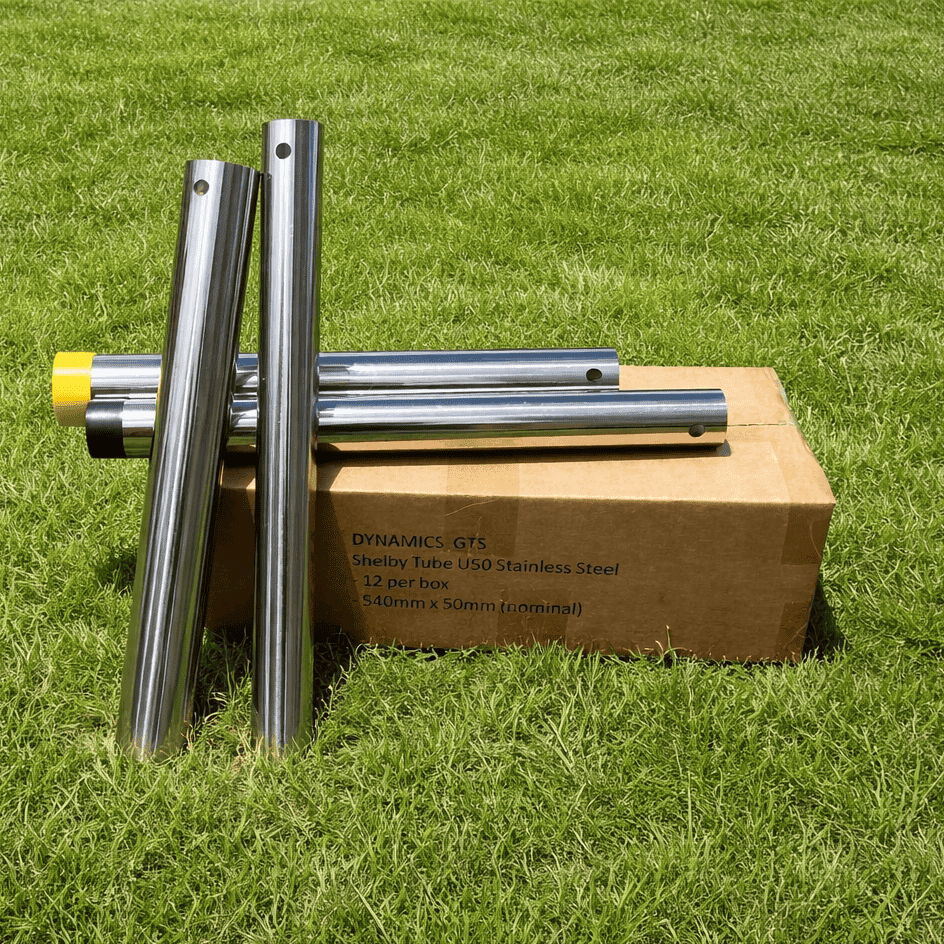
Specifying Shelby tubes for undisturbed cohesive soil sampling under AS 1289.1.3.1. U50, U63, U75 sizing, mild vs stainless steel, edge geometry, and field handling.
Every undisturbed soil test begins with careful sample handling in the tube. Any compromise – such as tube flexing, entry disturbance, or transit seal failure – can skew the results of subsequent tests. Ensuring proper handling preserves the sample’s true condition, reinforcing the importance of your expertise in producing accurate, reliable data.
Australian geotechnical practice for undisturbed cohesive soil sampling is governed by AS 1289.1.3.1 and AS 1289.7.1.1, with ASTM D1587 used on projects requiring imperial-spec compliance. The standards set the procedure. The tube specification – what’s actually pushed into the ground – is what determines whether the procedure delivers reliable laboratory results. Specifying the wrong size, material, or edge geometry shows up two weeks later, in lab results that aren’t usable.
What Australian Standards Require
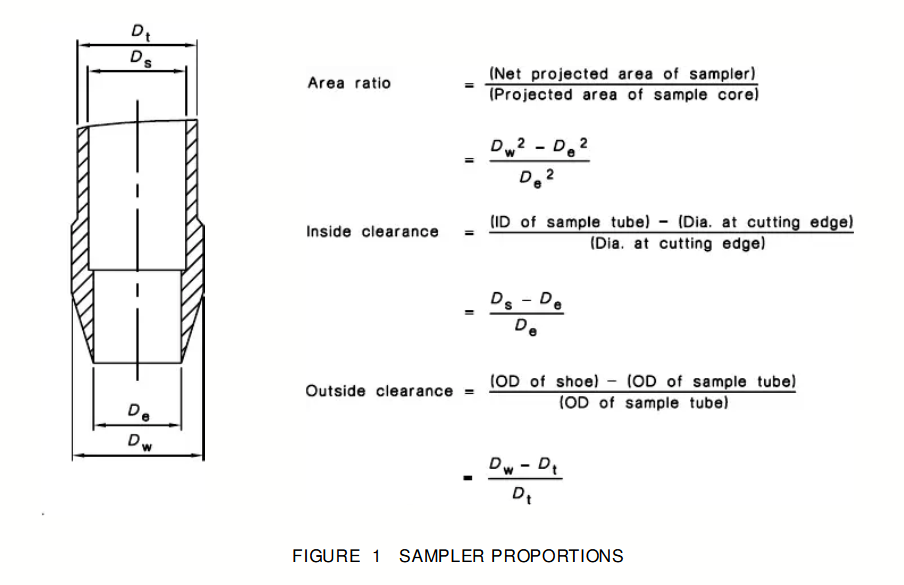
The defining characteristic of a Shelby tube is the area ratio – the ratio of soil displaced by the tube wall to soil sampled inside the bore. The lower the area ratio, the less the surrounding soil is disturbed when the tube is pushed in. ASTM D1587 specifies that thin-walled samplers should target an area ratio of 10% or less; AS 1289.1.3.1 sets equivalent geometric requirements for the Australian thin-walled open-drive sampler.
In practical terms, that means a thin-walled tube with a sharpened cutting edge and a smooth internal bore. A slight inside clearance ratio (the bore diameter increasing minutely from the cutting edge to the body) reduces wall friction during push and eases sample release at the lab.
Three sizes are commonly specified in Australian practice: U50 (48mm internal diameter, 540mm length), U63 (60mm ID, 500mm length), and U75 (76.2mm ID, 500mm length). A fourth, U63 2.5″, is a 63.5mm-ID variant matching the 2.5-inch nominal size used on ASTM D1587 projects – useful when the consultant or client specification requires imperial compliance rather than AS metric.
Sizing: Matching the Tube to the Test Program
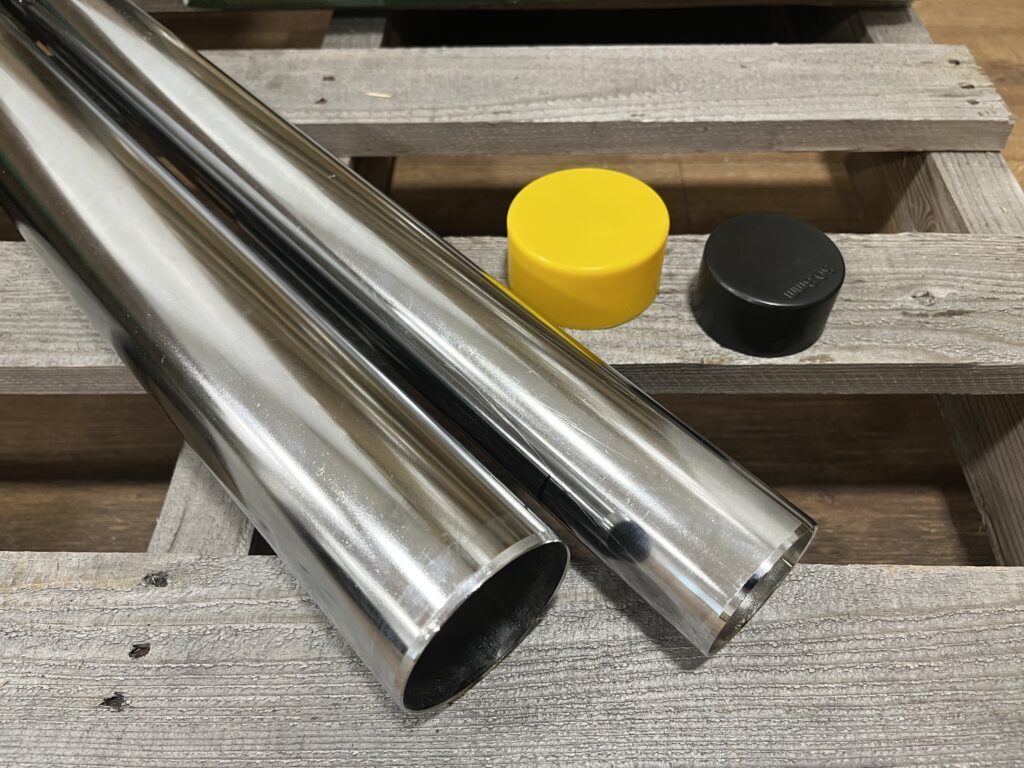
The choice between U50, U63, and U75 is driven by what the lab is going to do with the sample.
U50 is the standard for routine geotechnical investigations on cohesive soils – soft to firm clays, silts, and organic soils. The smaller diameter requires less push force, which means cleaner sampling in soft material where over-push is a real risk. Sample volume from a 540mm tube is sufficient for moisture content, Atterberg limits, and basic strength testing.
U63 delivers approximately 45% more sample volume per push than U50. It is preferred where the lab program requires multiple tests from a single tube – triaxial, consolidation, and shear from one continuous sample column. The larger volume also tolerates more end-trimming of disturbed material at the cutting edge, leaving more representative soil in the central portion. Used for stiffer clays and any program where sample yield matters as much as integrity.
U75 is approximately 2.3 times the sample volume of U50. It is specified where multi-test programs from a single column are critical, where stiffer cohesive material requires a larger-bore tube to reduce proportional edge disturbance, or where representative sub-sampling demands more material per metre of borehole. U75 requires more push force, better-prepared boreholes, and cleaner alignment – but the sample yield justifies it on programs where re-drilling for additional material isn’t viable.
For a typical investigation, the sampling plan might specify U50 for shallow soft-clay layers and U63 or U75 for deeper firm-to-stiff layers requiring consolidation testing. Mixed orders are common – running two or three sizes from the same supplier means consistent thread compatibility with the rig’s sampling head and one SKU prefix family to track.
What Controls Sample Integrity: Edge, Wall, and Finish
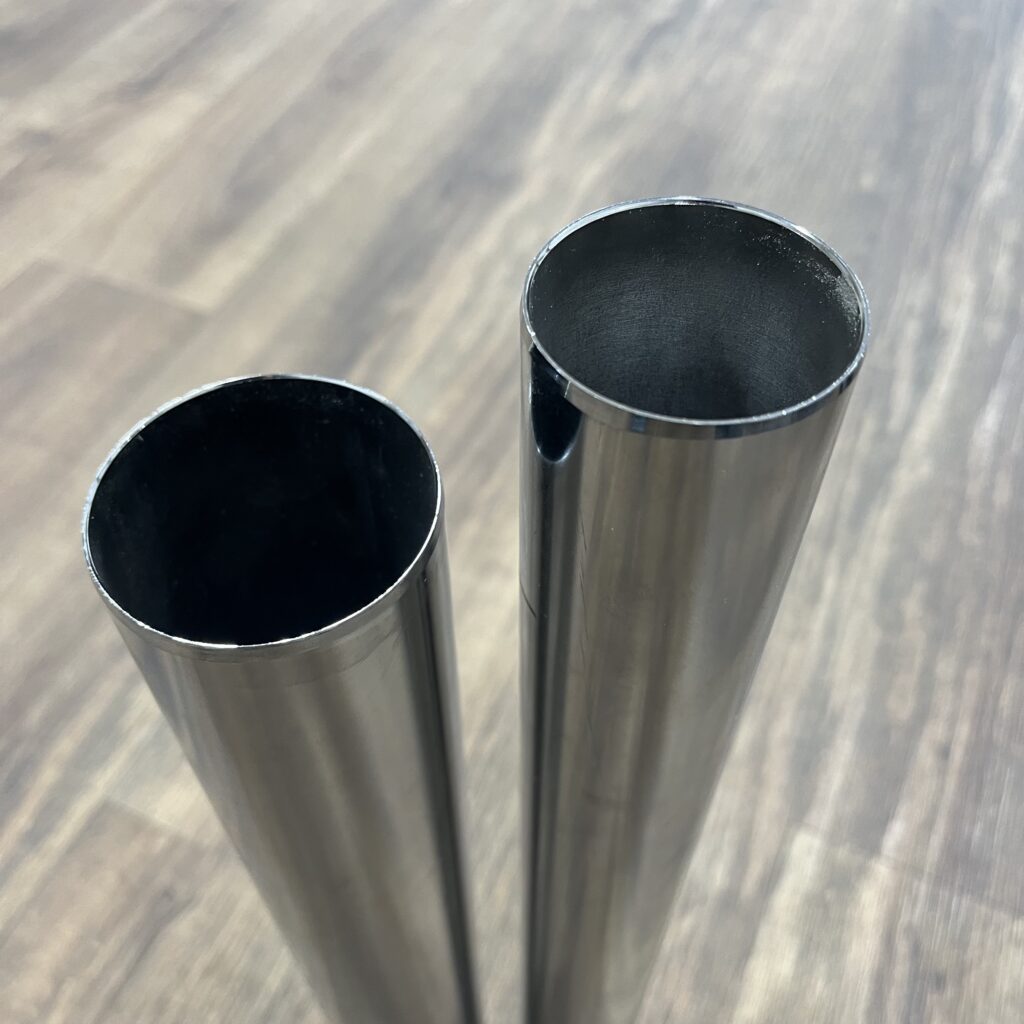
The standard sets the tube geometry. Actual sample integrity comes down to manufacturing details that aren’t in the standard but make the difference between a usable sample and a re-drill.
Cutting-edge geometry. The leading edge needs to be sharpened to a clean bevel and ground to a consistent internal taper. A blunt or square-ended tube compresses soil ahead of the cut rather than slicing it, increasing disturbance at the leading face. A poorly machined cutting edge is one of the most common causes of disturbance in otherwise correctly sampled tubes, and one of the hardest to detect in the lab.
Wall consistency and straightness. Thin-walled tubes need consistent wall thickness around the circumference and straightness over the full length. Out-of-round tubes, typical of low-grade cold-drawn stock, produce asymmetric soil entry and visible smearing on the sample column. Straightness matters at extraction, when the sample is pushed back out for testing.
Internal surface finish. Friction along the inside wall during push transmits as soil disturbance. The internal bore needs to be smooth, with no machining marks, weld lines, or pitting from oxidation. For samples sitting in a lab for a week or more after extraction, internal corrosion can stain or contaminate the sample column.
Material selection. Mild steel is the standard for routine geotechnical work and the cost-effective choice for short-turnaround testing. Stainless steel is specified for chemically aggressive samples – acid sulphate soils, contaminated sites, sulphide-bearing materials – for samples requiring extended storage between collection and testing, or for any program where corrosion-induced sample contamination would compromise the result. Both options are available across U50, U63, and U75 sizes, with end caps supplied separately for sealed transport.
Field Handling from Rig to Lab
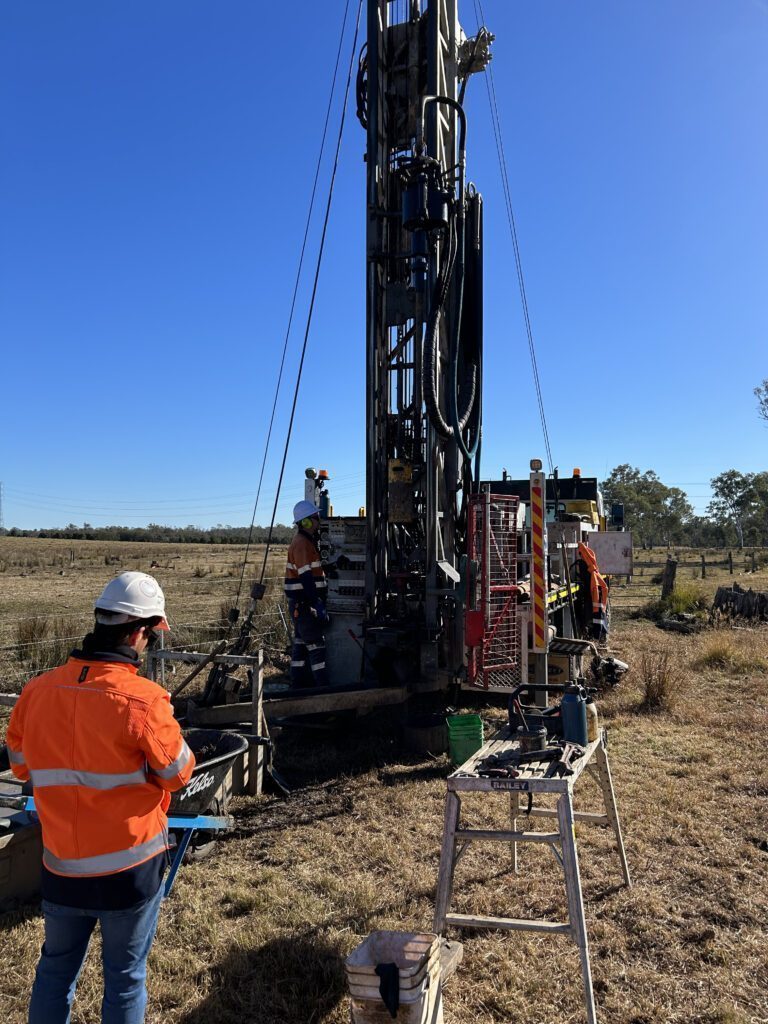
Specifying the right tube is half the equation. The other half is how it’s pushed and handled between the rig and the lab.
Push, don’t hammer. Hydraulic push is the preferred sampling method – continuous, controlled push at a steady rate. Hammer-driven sampling introduces shock that disturbs the sample column, defeats the area-ratio benefit of thin walls, and generally produces unusable triaxial specimens. Hammer sampling has its place in the SPT split-spoon procedure; it’s not appropriate for Shelby tubes.
Cap immediately, seal both ends. End caps go on at the rig before the tube leaves the borehole. Wax sealing both ends preserves the moisture content. A loose cap or unsealed end allows moisture loss in transit, compromising any test that depends on natural moisture content, which is most of them.
Mark orientation and depth. Top and bottom marked clearly, sampling depth recorded, hole identifier written on the tube body. Lost orientation at the lab means testing without knowing top-to-bottom – usable for some tests, but not for layer-specific analysis.
Vertical transport, vibration-isolated. Shelby tubes ride vertically during transport, packed to reduce vibration. Horizontal transport allows the soil column to settle within the tube, opening voids at the top end. Bench-stored tubes need shaded, temperature-stable storage between sampling and lab pickup. A parked ute on an Australian summer afternoon is not adequate.
Lab Extraction and Reuse
In the lab, samples are extruded using a hydraulic extruder, pushing in the same direction as the original push, which preserves the soil fabric and minimises additional disturbance. Pushing in the wrong direction inverts the column, making layer-by-layer interpretation impossible.
Mild steel tubes are technically reusable for routine geotechnical work, provided the cutting edge is re-sharpened between uses and the internal bore is inspected for scoring or contamination. For sensitive testing programs – environmental sampling, contaminant work, NATA-accredited consolidation testing – single-use is the safer specification, and stainless steel is generally preferred to eliminate corrosion-induced cross-contamination over the storage period.
For trimmed end-material from each tube, see our sample bag selection guide for ziplock and heavy-duty options suited to the supplementary samples.
Learn more about the Dynamics GTS Shelby Tube range.
Ordering Details: Shelby Tubes are available in U50 (48mm ID, 540mm length), U63 (60mm ID, 500mm length), U63 2.5″ (63.5mm ID, 500mm length, ASTM-spec) and U75 (76.2mm ID, 500mm length) sizes. Each size is supplied in mild-steel or stainless-steel construction. End caps available separately. Standard pack quantities are 12 per box for U50 and U63 sizes, 9 per box for U75.
Request Quote → or call 1800 518 051.