Reusable Geotechnical Sample Container vs Disposable Sample Bags: Which Is Right For Your Operation?
Walk onto almost any geotechnical site in Australia, and you’ll see the same thing: a stack of plastic sample bags, someone wrestling a heavy bag into the back of a ute, another bag already split from rough handling the day before. It’s how soil samples have been collected, transported, and stored for decades.
It works. But for a growing number of operations, it’s worth questioning whether it should still be the standard.
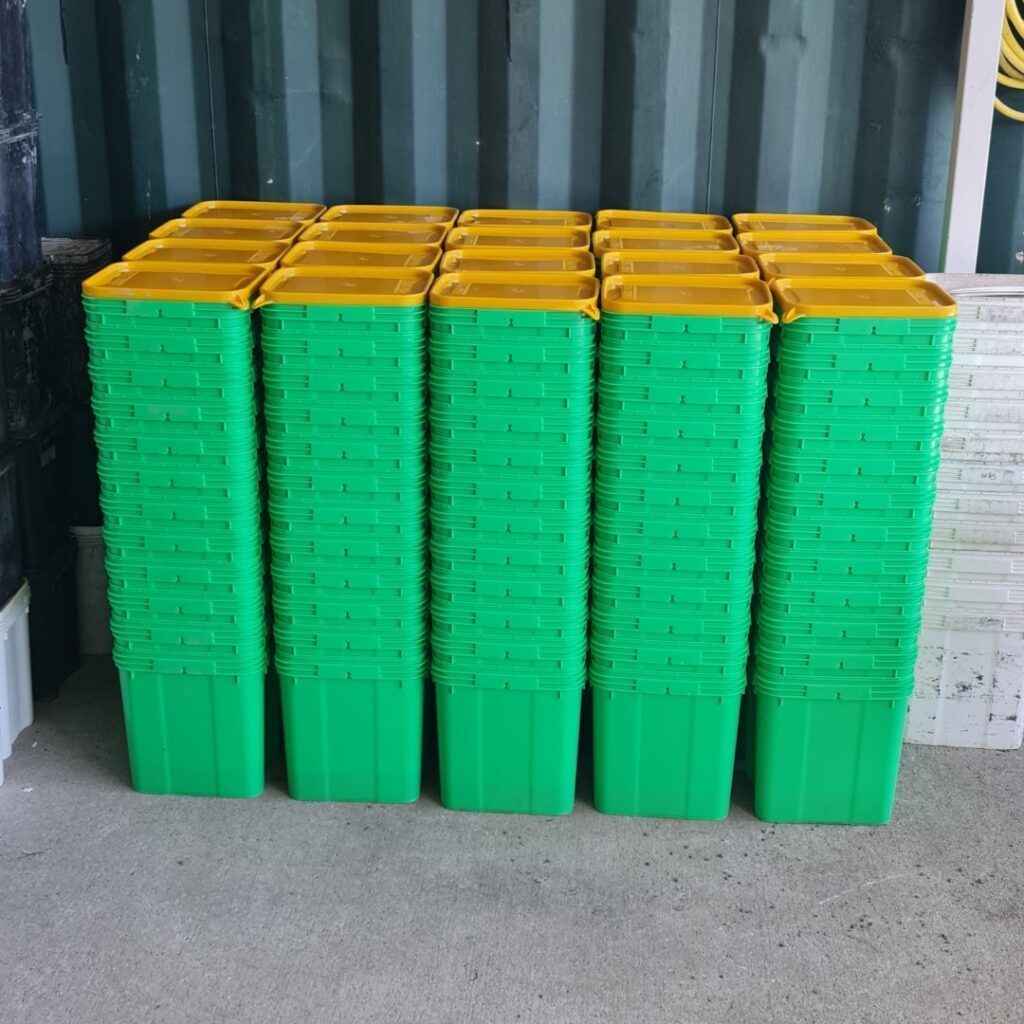
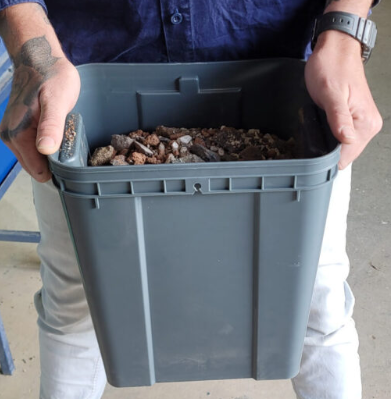
The ErgoPod is a reusable geotechnical sample container, engineered as an alternative to disposable bags, with a rigid, stackable design, ergonomics, and construction from Australian-recycled polypropylene. For many operations, the economics and the WHS case are clear enough to warrant running the numbers on the switch.
Cost of a Reusable Geotechnical Sample Container
The sticker price on a sample bag is low. The total cost of using them across a program isn’t.
Every sample needs a new bag. Across a 500-sample program, that’s 500 bags purchased, shipped, stored on-site, distributed to drillers, and disposed of at the end of life. Plastic bags split under clay, gravel, or saturated loads – failures can lead to cross-contamination, sample loss, or a re-bag at the lab. Bags don’t stand up on their own, so loading is a two-person task or a wrestling match with a container that’s slumping. Palletised stacks slump, shift, and occasionally topple.
An ErgoPod has a higher upfront cost per unit, but it’s reusable across hundreds of samples. The per-sample cost falls with every use:
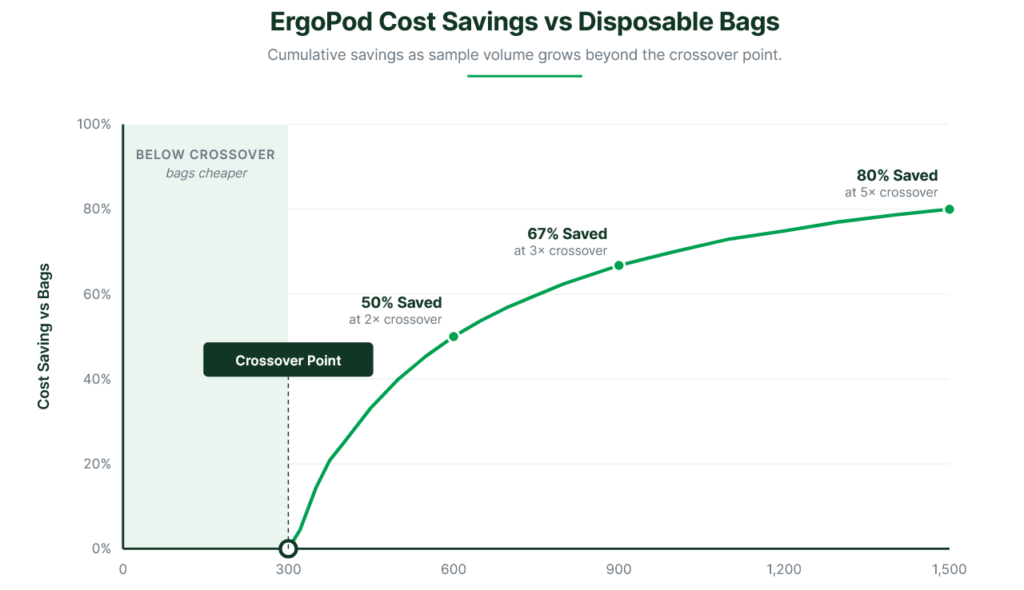
At realistic prices, the crossover – where bags become more expensive than the ErgoPod – comes within the first few hundred samples. After that, each sample is cheaper than the previous one. For an operation running thousands of samples a year, the amortised cost approaches zero.
The WHS Perspective
Musculoskeletal disorders account for around a third of serious workplace injuries in Australia, and over-exertion during lifting and handling drives the majority of them. In the field, the gear you use dictates how the lift happens.
Weight standardisation. The ErgoPod’s 16L / 20kg carrying capacity aligns with modern manual handling guidelines. Bags get filled to whatever the driller can carry – sometimes heavier than they should be, because a half-empty bag is awkward and feels wasteful.
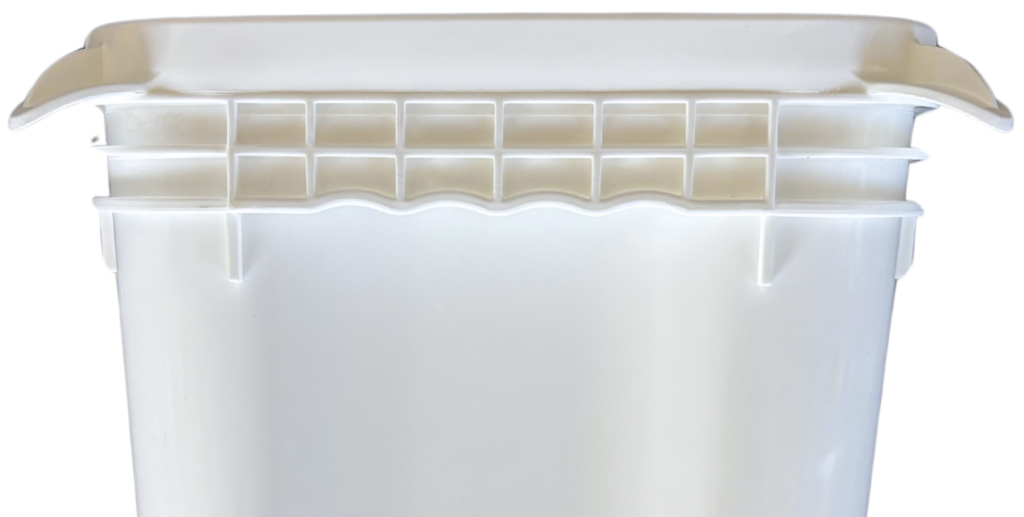
Grip mechanics. Integrated lifting lugs with deep finger grooves promote a pad-grip rather than a fingertip-grip. The finger pads contain over 3,000 nerve endings – protecting them reduces nerve strain and improves grip security.
Load position. The ErgoPod’s contoured shape keeps the load close to the body’s centre of gravity, reducing lumbar strain. A bag slung off-centre by its tied neck puts the load away from the body – the worst possible position for the spine.
The Power Zone. Whatever container you use, lift within the Power Zone – mid-thigh to mid-chest. This keeps the back in a neutral position and reduces spinal compression by up to 40%. Rigid containers with integrated grips make this achievable on a repetitive basis. Bags make it harder.
Sample Integrity
Most plastic bags aren’t airtight, and even lined or sealed bags rely on a tied neck that can come loose during handling. That’s fine for dry samples. It’s a problem for moisture content testing, for samples that need to preserve their in situ condition, or for anything sensitive to evaporation during transport and storage.
The ErgoPod uses an airtight snap-fit lid. Samples stay at their collection moisture content from the field environment to the lab. Rigid, non-porous polypropylene walls prevent cross-contamination between samples.
Stackable, trackable, ready for digital workflows.
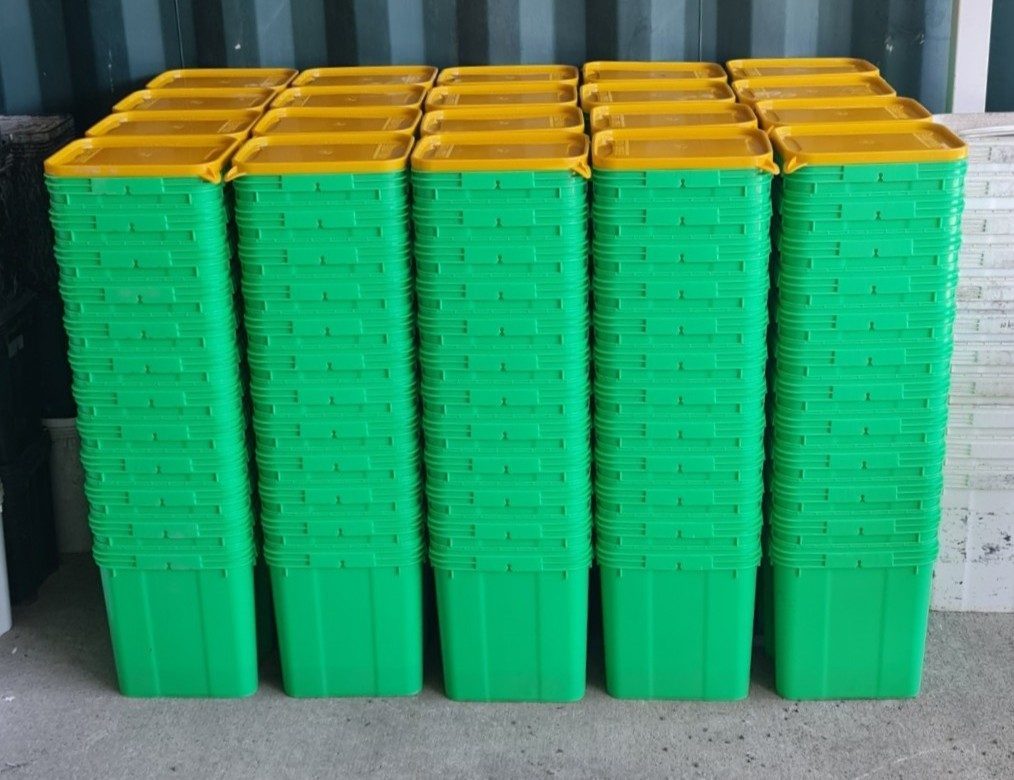
The rigid, interlocking form factor eliminates the slumping and shifting that characterise bag stacks. ErgoPods are designed to carry QR codes, NFC tags, or RFID tags – enabling a digital chain-of-custody from collection to the lab to the archive. Paper labels on wet bags fail. It’s a known failure mode in the field sample chain-of-custody.
Sustainability
The ErgoPod is Australian-made from 100% recycled polypropylene. For operations reporting against ESG targets or working under procurement policies that require sustainable alternatives, the switch shifts sample handling consumables from an environmental cost to an environmental win – fewer bags manufactured, fewer bags disposed of, and local recycled content replacing virgin material.
When Sample Bags Are The Right Choice
Not every operation should switch. Bags still win in specific cases:
- Low-volume or one-off programs where the upfront pod cost won’t amortise before the program ends.
- Archival samples that need to breathe during long-term dry storage.
- Remote fly-in programs where sample containers are left behind permanently rather than transported back.
Why Reconsider Sample Bags?
Choosing bags made sense when there wasn’t a rigid, ergonomic, reusable sample container specifically designed for the geotechnical industry. The ErgoPod changes the calculation. For geotechnical operations running regular sample volumes, cost-per-use falls, WHS exposure drops, sample integrity improves, and the ESG footprint shrinks.
Run the numbers on your own program. The crossover is probably closer than you think.
Learn more about the ErgoPod sample container system → ErgoPod
Ordering details: ErgoPod containers are available in white with airtight snap-fit lids, 480 per pallet. Custom colours and QR/RFID integration available with minimum order quantities. Request Quote → or call 1800 518 051.